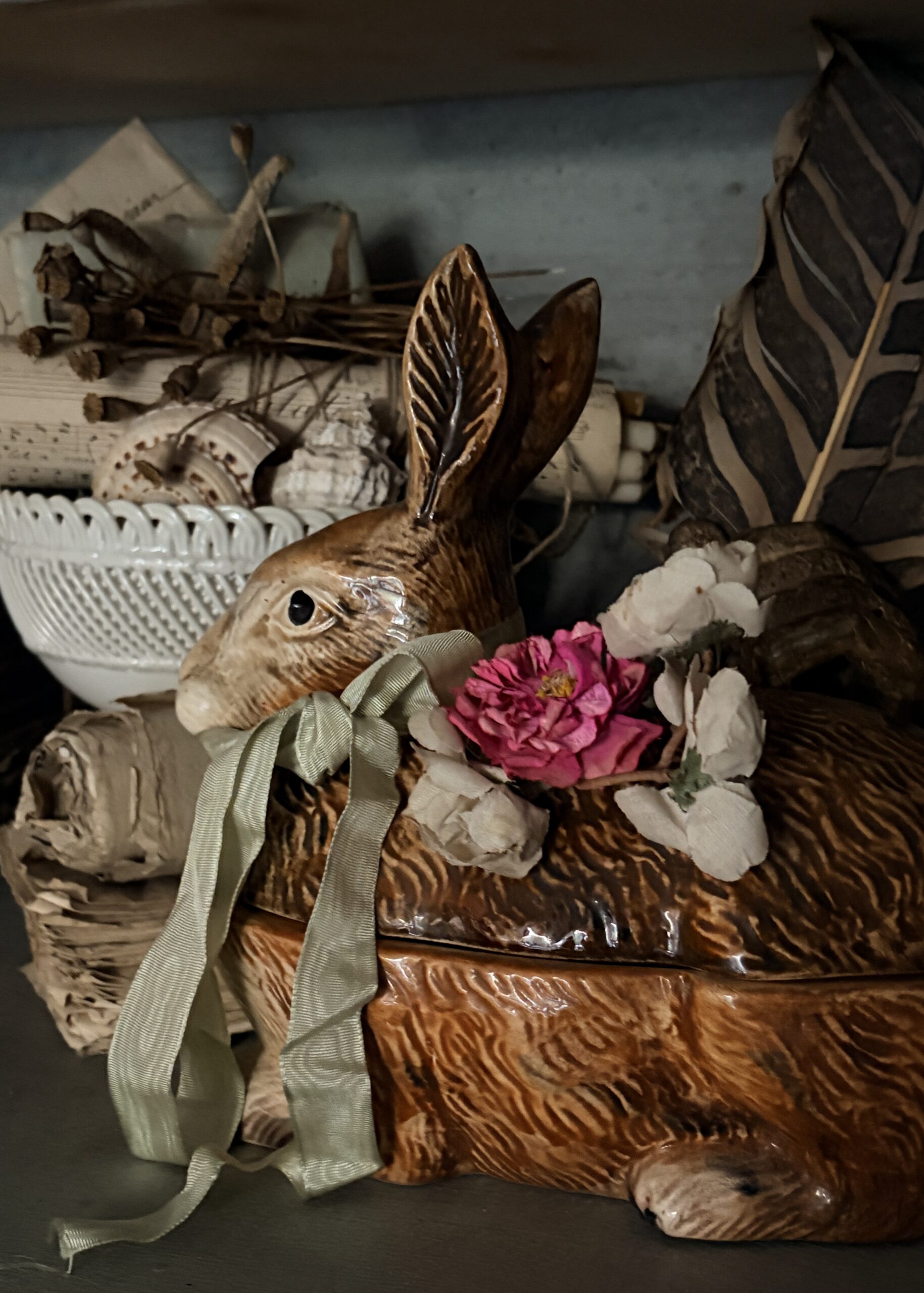
The first time I saw one of those rabbits at the brocante, I smiled wide with delight. I nearly tripped over myself reaching for it, as if someone else might snatch it away in that very second.
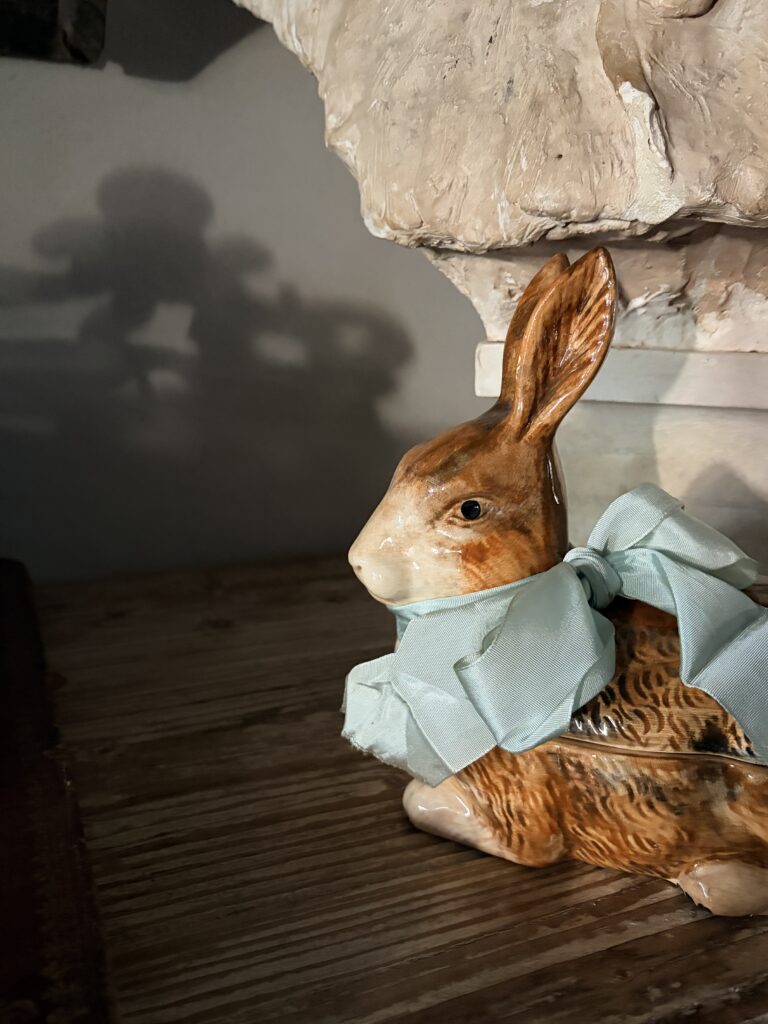
Never mind that it was meant for pâté de lapin… and I am a vegetarian.
That didn’t matter.
What I saw—what I felt—was Easter. Soft spring light, a kitchen table, and my daughter Chelsea, who was just two at the time, wide-eyed with wonder. I imagined the little rabbit filled with chocolate eggs, oh so cute!
When I brought it home, Yann looked at it and groaned.
“You know it is for the rabbit pâté…” he said in his French accent, which made it sound more like rabbit bad day.
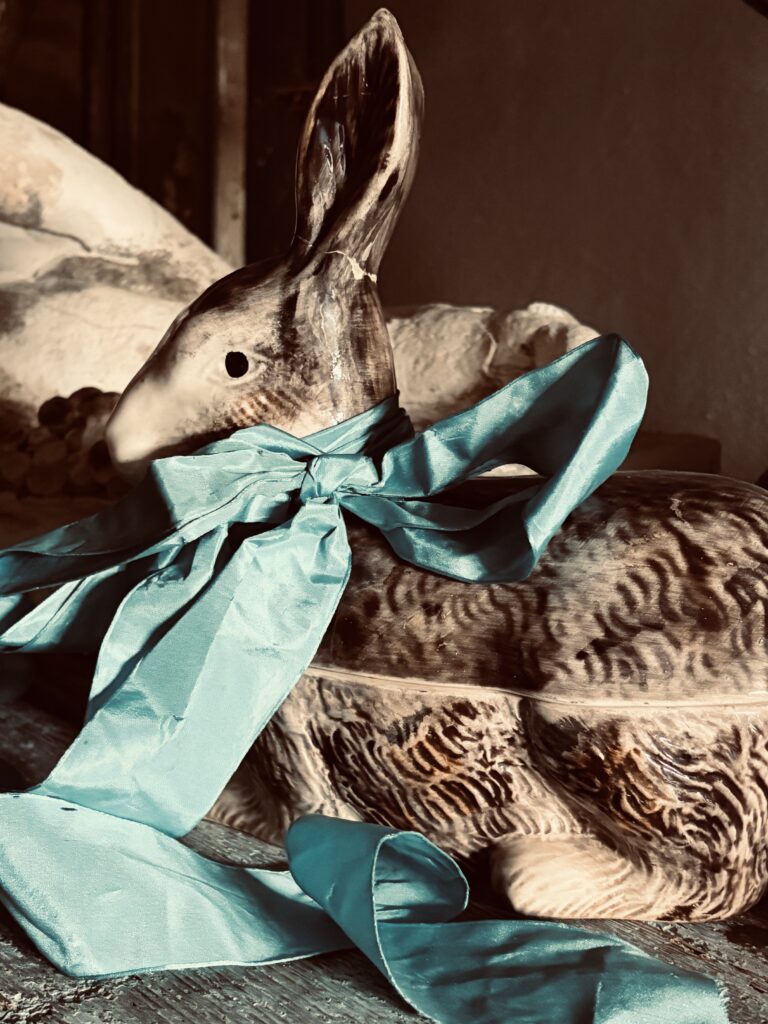
“Yes, yes,” I waved him off, “but I am going to use it for Easter eggs.”
He looked at me, puzzled.
“Bunnies bringing Easter eggs?”
“Yeah” I said with a puzzled look.
“It is not a bunny,” he insisted. “When does it lay eggs? In France, it is the bells that bring the chocolates.”
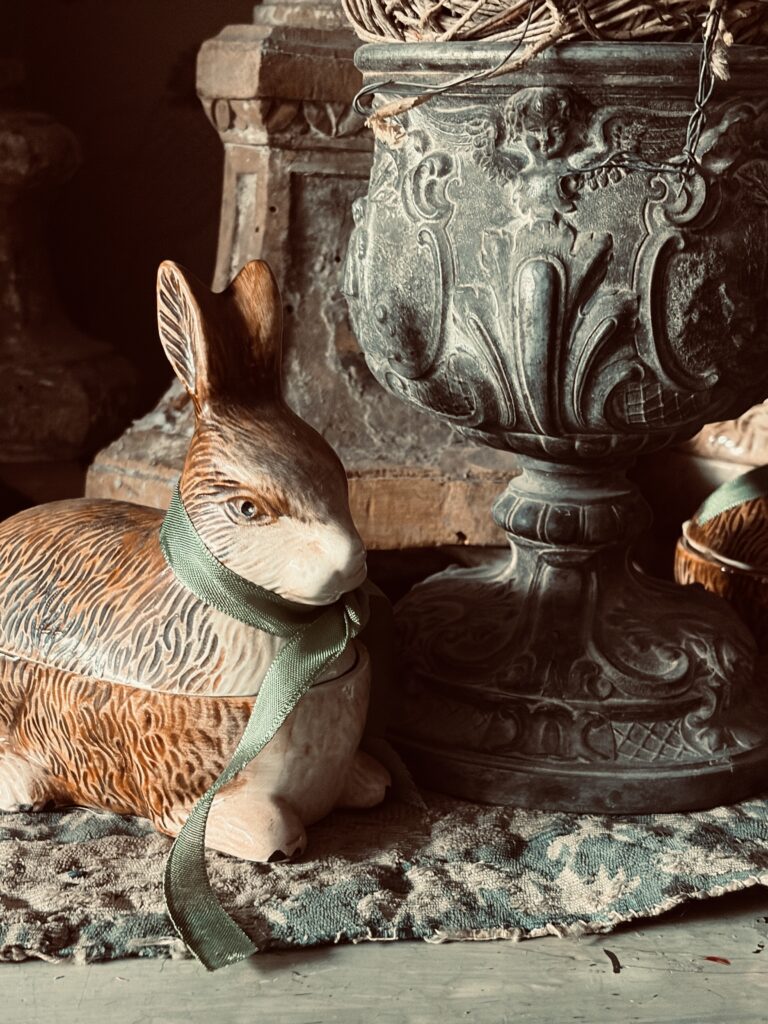
And just like that, standing in our kitchen, we found ourselves in one of those wonderfully tangled Franco-American conversations—bells versus bunnies, tradition and imagination.
Quelle déception, he said, shaking his head at my bunny.
But in our home, both cultures live side by side. And while the bells may fly over France, the bunnies hopped onto our kitchen table.
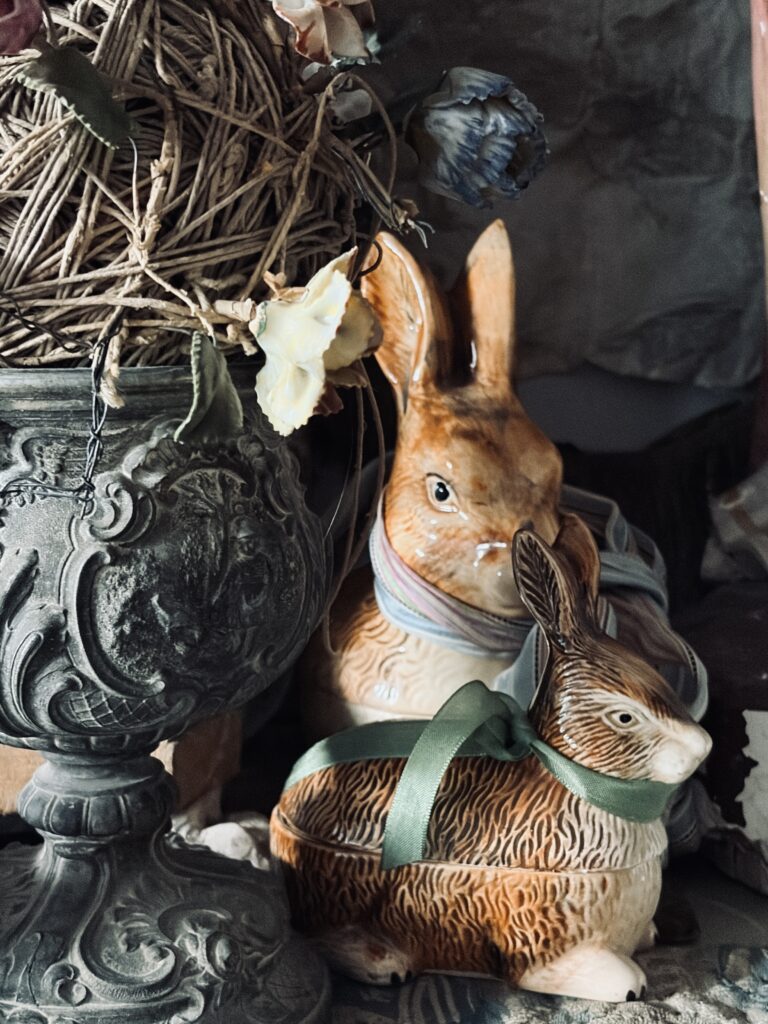
Somewhere along the way, Yann was captured by the bunny charm- he began to see what I saw. The whimsy roped him in.
And then… he started bringing them home.
One became two. Two became ten. Ten became twenty. And now, nearly forty years later, we have a ridiculous number of rabbits. Truly. An entire cupboard that looks more like a rabbit hutch without the cleanup.
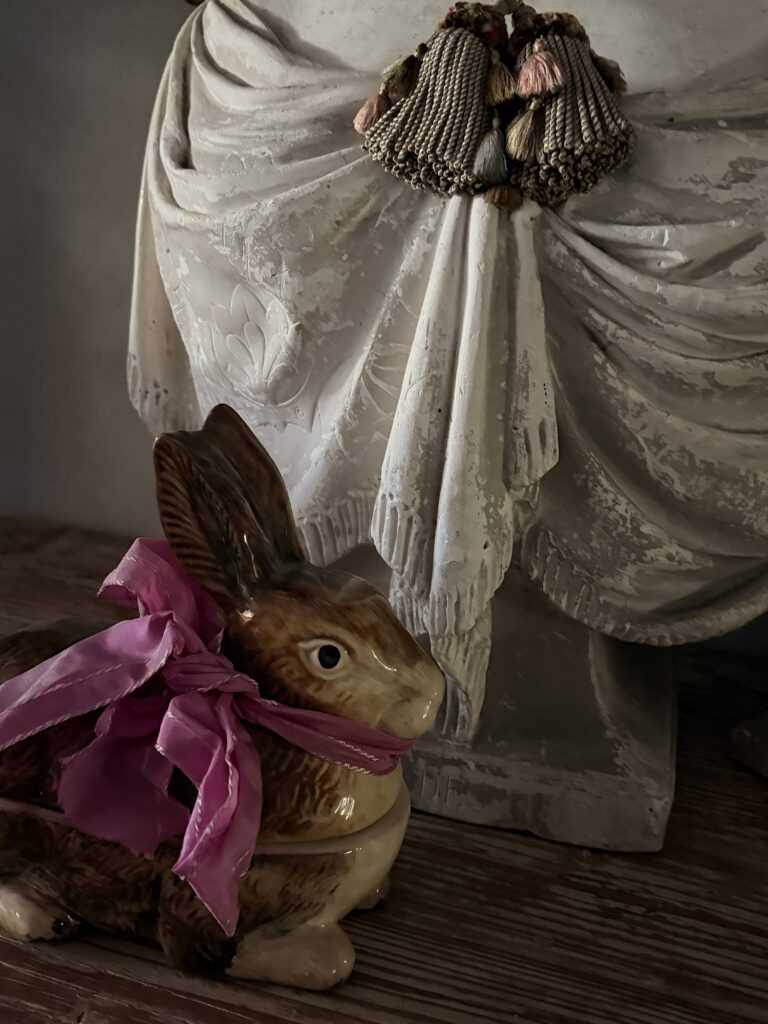
(Thankfully—and I do mean thankfully—Yann only collects these rabbits… and not every bunny that crosses his path.)
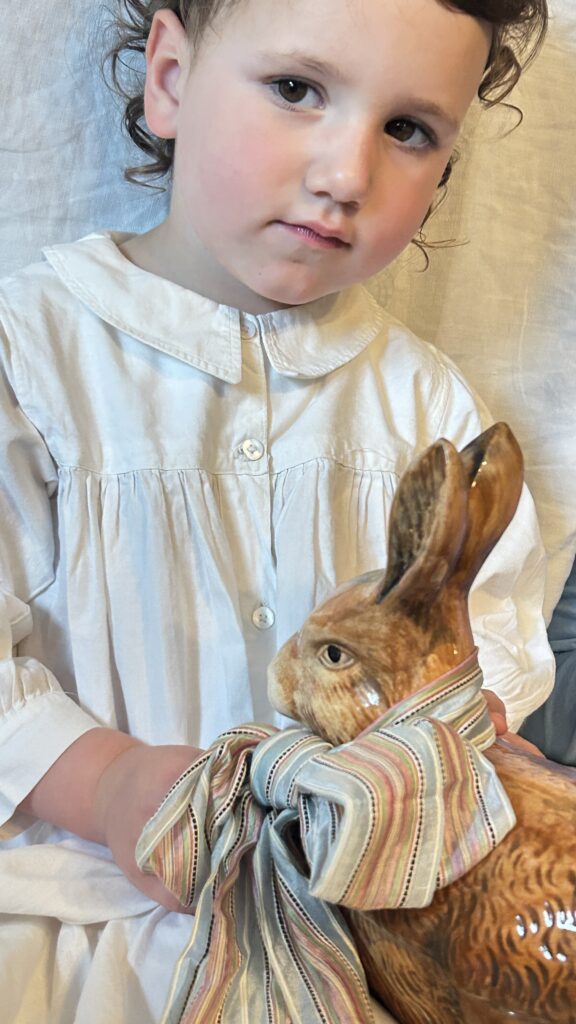
Every spring, before Easter, they come out- hopping from cupboard to table, from shelf to sideboard— to delight us.
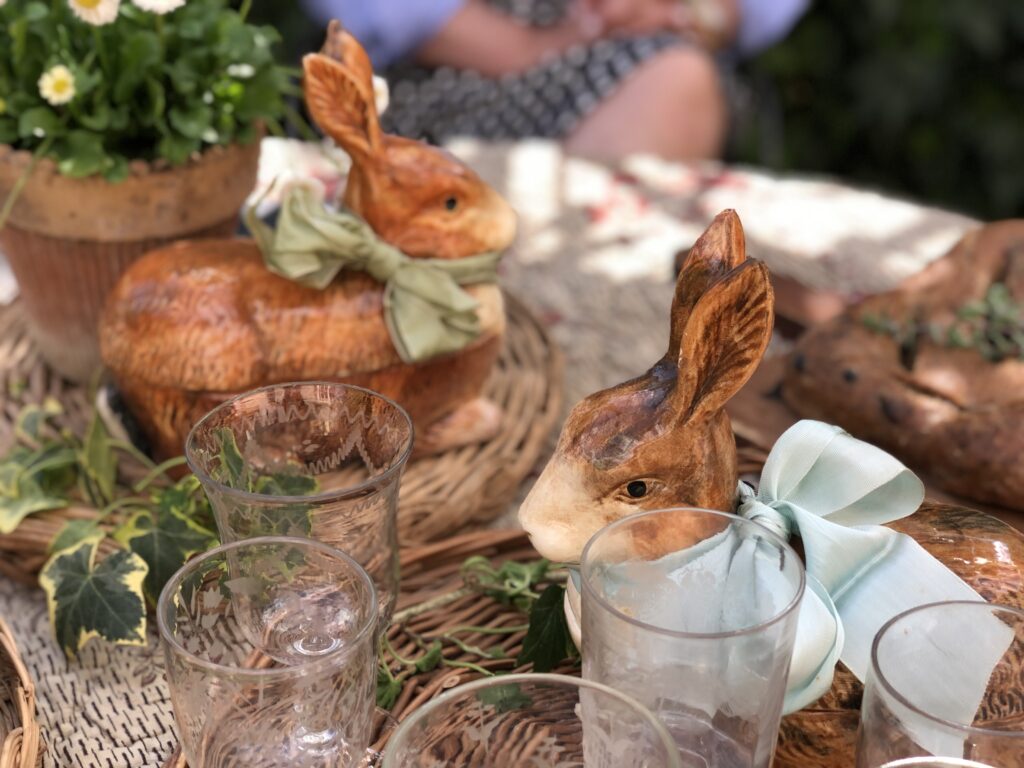
The rabbits are made by Michel Caugant, a family company that began in France in the early 20th century. They became known for their charming, lifelike animal terrines—each one molded and hand-painted, giving them that slightly whimsical, slightly serious expression that makes them feel almost alive.
The ceramic rabbits we collected originally cost between €15 and €35, but if you look for them online now, their price has tripled. I’ve added antique ribbons—because why not.

Leave a Reply