“Smell is a potent wizard that transports you across thousands of miles and all the years you have lived.” — Helen Keller
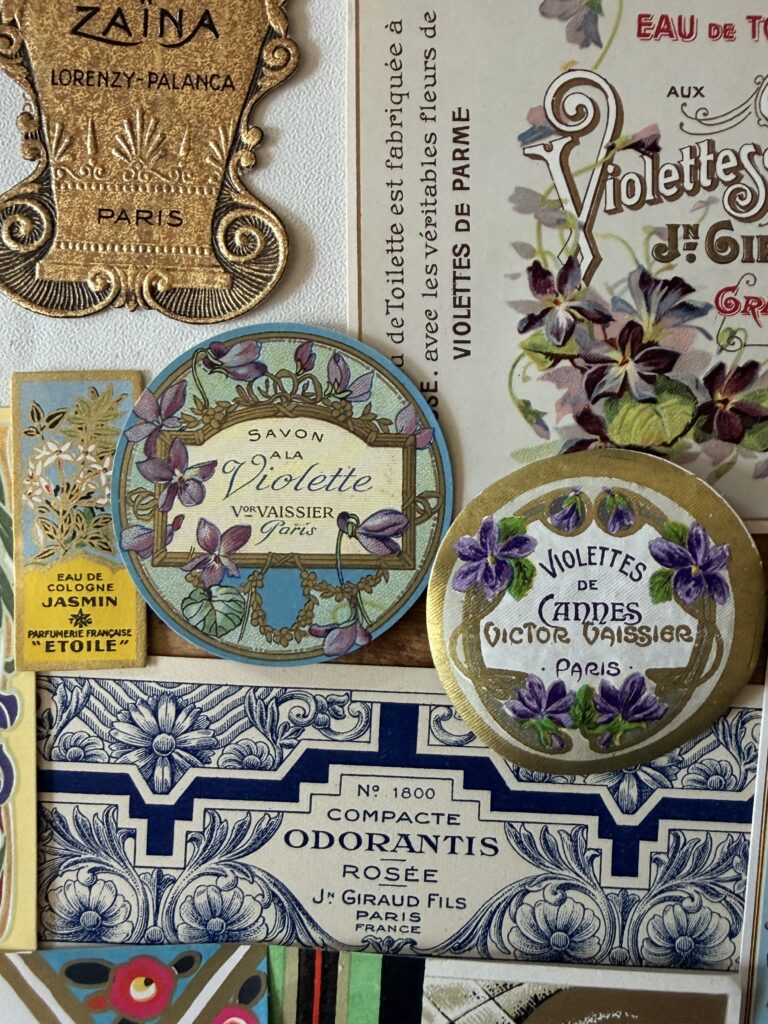
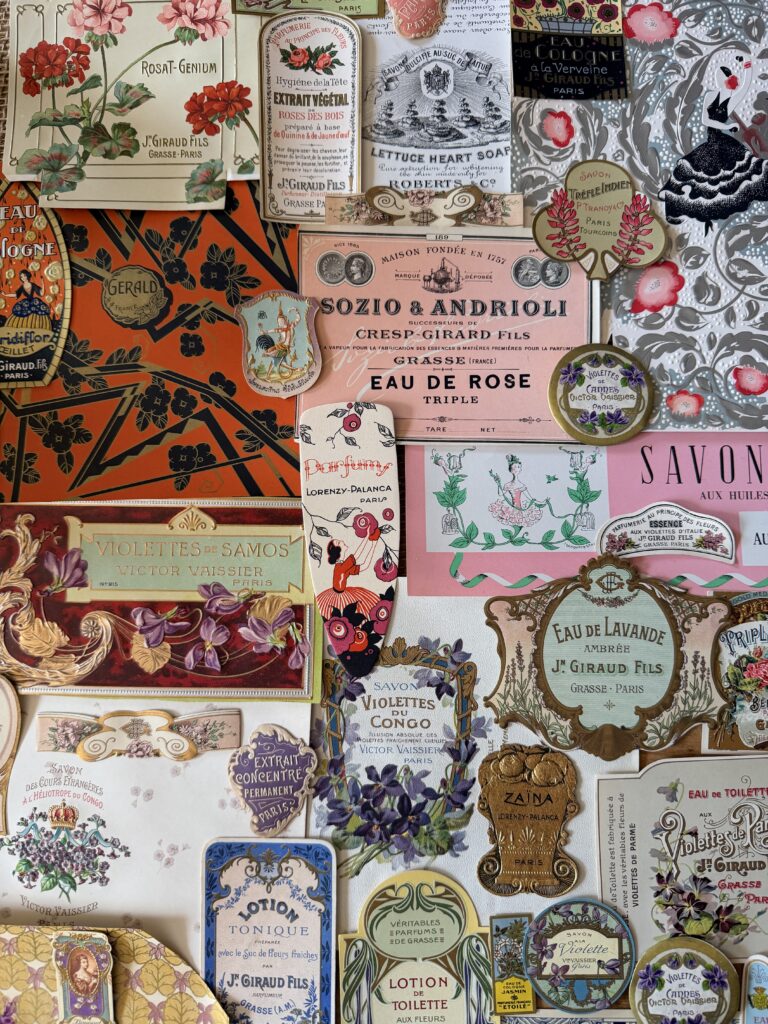
Recently, I came across hundreds of antique perfume labels for soaps, lotions, and fragrances, and it pulled me into the rabbit hole about perfume.
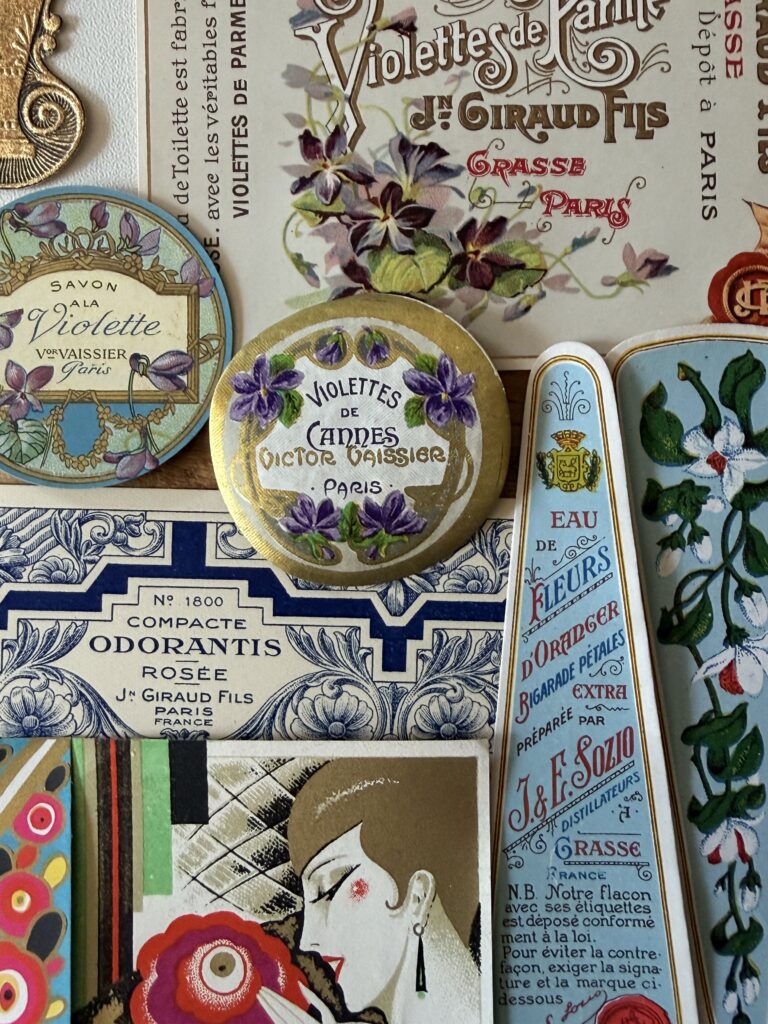
The story stretches back to early figures like Tapputi in Mesopotamia, one of the first known distillers of scent, to Cleopatra, who used fragrance as an extension of presence and power. Then to Renaissance France, Maria de’ Medici brought Italian perfume traditions where scent blurred the line between beauty and medicine. By the late 1800s, perfume had become both art and industry—Victor Vaissier turning fragrance into imaginative “exotic” storytelling through soaps like Congo Rose, while houses like Giraud and Sozio in Grasse quietly built the technical foundations of modern perfumery behind the scenes.
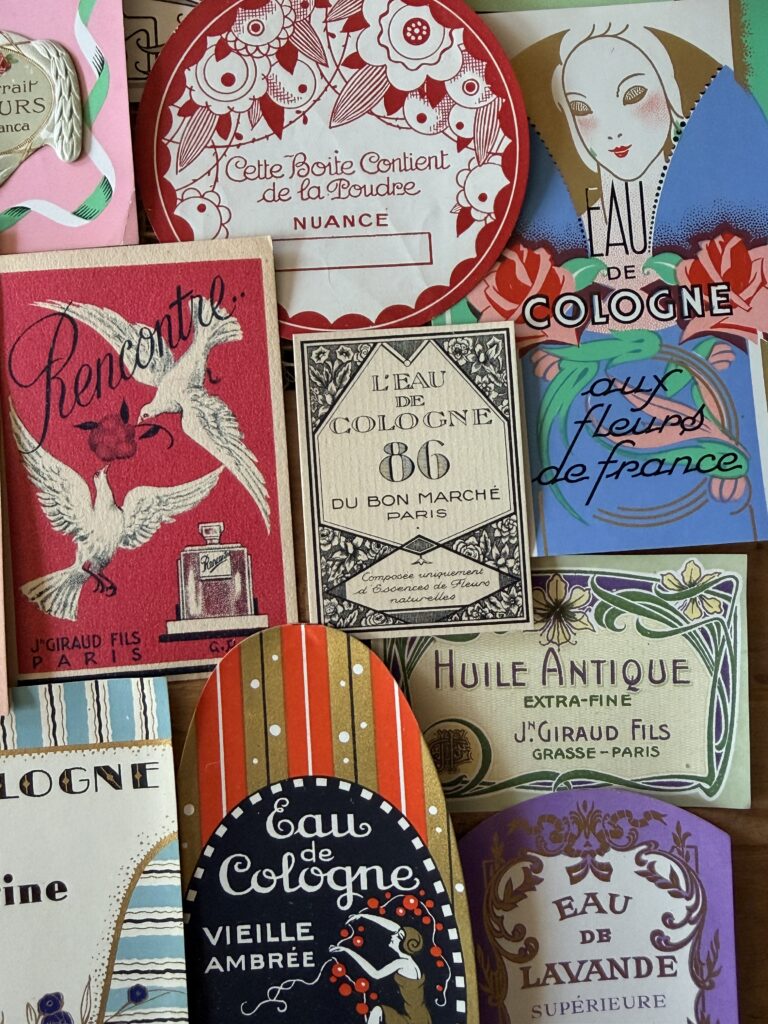
A “nose” in perfume making is someone who thinks in scent. They can pick apart a fragrance the way a musician hears individual instruments in a song, noticing tiny notes people miss. Their job is part instinct, part obsessive training: remembering thousands of raw materials and imagining how they’ll blend, clash, or bloom over time on skin-
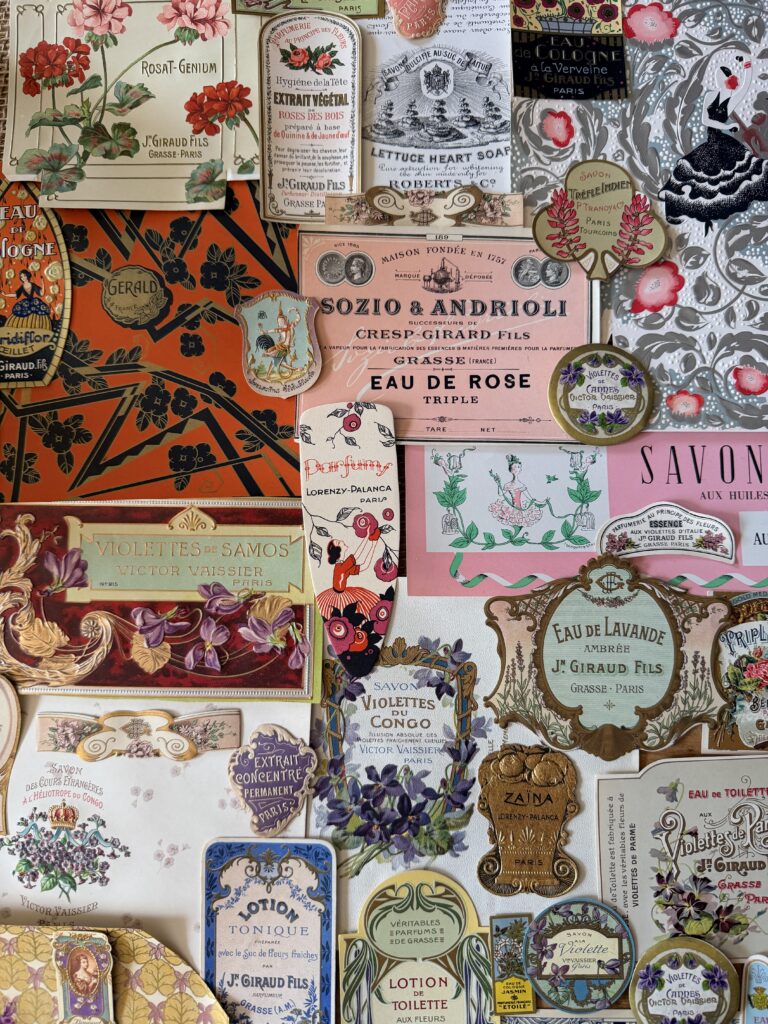
This sensitivity is almost supernatural—like the world is made of invisible layers only they can read.
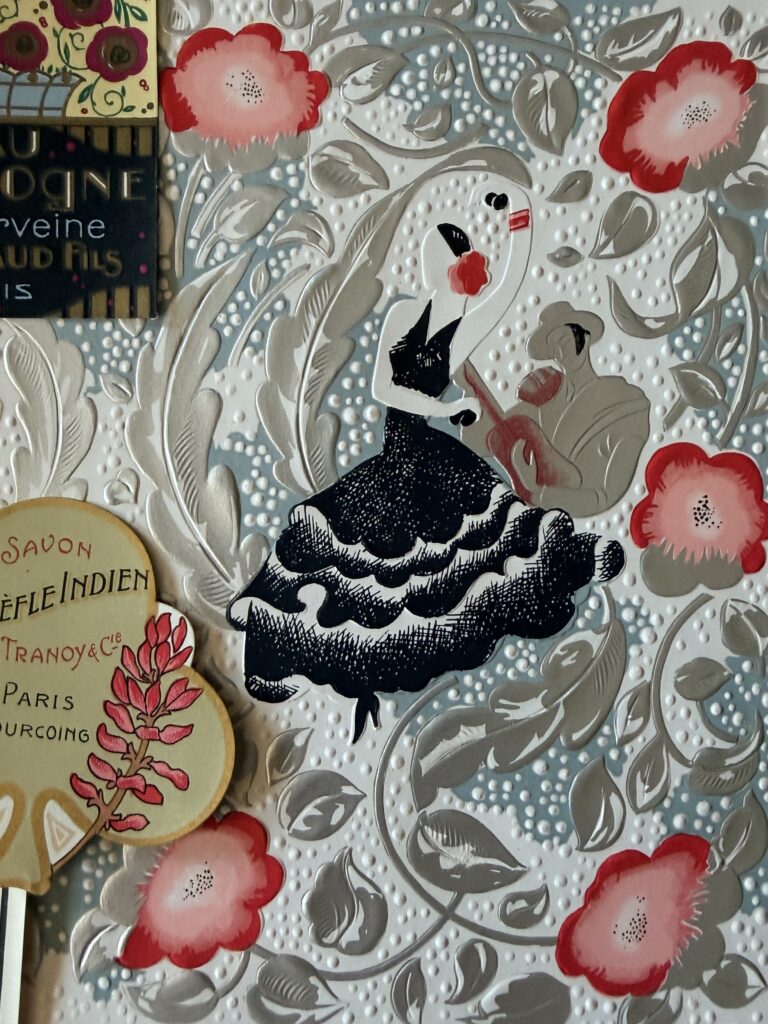
Oh perfume, crushed petals on warm skin: rose, jasmine, violet, orange blossoms, lavender –

Leave a Reply